Multi-Language Distributed Incentive Platform Setup: FastAdmin Framework Node Hosting Simulation System Deployment Guide
Multi-Language Distributed Incentive Platform Setup: FastAdmin Framework Node Hosting Simulation System Deployment Guide
Disclaimer: This article is provided for technical education and demonstration purposes only. It does not constitute investment advice, financial guidance, or an endorsement of any business model. Any real-world deployment must undergo legal review and comply with all applicable laws and regulations in the target jurisdiction. There are no guaranteed returns.
A while back, I helped a client who focuses on overseas markets deploy a multi-language distributed incentive platform built on the FastAdmin framework. At first glance, the project looked like a node hosting simulation system: users register membership tiers, participate in platform activities, and receive token-based incentives through a partner tier structure. The entire stack is a teaching example of how to separate frontend and backend, integrate multi-language support, and connect crypto payment rails such as USDT-TRC20. The deployment process is worth documenting for developers who want to understand the architecture, but please remember that this article focuses purely on technical implementation, not on operating an investment program.
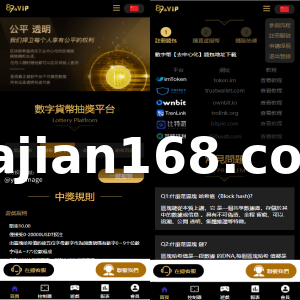
Part One: Feature Overview — Core Modules of the Distributed Incentive Platform
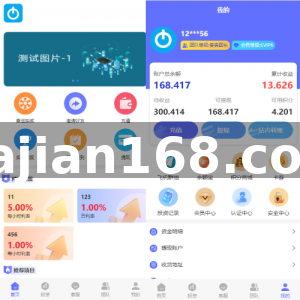
This system is developed using the FastAdmin framework with a completely separated frontend and backend. The functionality is more comprehensive than I expected:
- Node Hosting / Membership Tier Simulation: Users can select participation tiers ranging from basic to advanced, priced between 50 USDT and 5,000 USDT in the demo configuration. Each tier represents a simulated node hosting slot that accumulates platform tokens based on the configured schedule. This is purely a technical demonstration and can be adapted to other reward-logic experiments.
- Membership Referral Program: The backend supports a configurable partner tier system with multiple referral levels. Commission rates can be adjusted per tier in the admin panel. The implementation is useful for learning how to model referral trees, but it must not be interpreted as a pyramid or investment scheme.
- Independent Agent Backend: Each agent receives a dedicated management panel to review team activity, incentive history, and withdrawal records without needing access to the main admin backend.
- Multi-Language Frontend: Supports English, Chinese, Hindi, and Brazilian Portuguese. The frontend is built with plain HTML and JavaScript, avoiding heavy framework dependencies and keeping load times fast.
- Marketing Red Envelope Module: Administrators can release randomized reward envelopes during campaigns or holidays. This is a common retention mechanic used in many platforms and serves as a good example of event-driven token distribution logic.
- Investment Password Protection: A separate withdrawal password is required in addition to the login password, adding an extra layer of security for sensitive operations.
- Invitation Code System: Every user receives a unique invitation code. Scanning or entering the code during registration automatically links the referring and referred accounts in the database.
- Auto-Reinvestment Option: Users can opt to automatically convert accrued tokens into additional node hosting slots. This demonstrates how a scheduling job can compound simulated balances over time.
Part Two: Preparation Checklist — Deployment Environment Requirements
This system is not particularly demanding on hardware, but because it is usually aimed at overseas users, network latency and server location deserve special attention:
- Server Configuration: Minimum 4 cores and 8 GB RAM; recommended 8 cores and 16 GB RAM, with bandwidth above 5 Mbps. Overseas data centers (India, Singapore, or US West Coast) are preferred for lower latency.
- System Environment: CentOS 7.8+ or Ubuntu 20.04+.
- Backend Framework: FastAdmin 1.3+ (based on ThinkPHP 6.0), PHP 7.4+, MySQL 5.7+.
- Frontend Deployment: Plain HTML and JS, which can be served directly by Nginx or a CDN. Cloudflare acceleration is recommended.
- Database: MySQL master-slave architecture with daily scheduled backups. As the data volume grows, consider table partitioning.
- Payment Channels: Primarily USDT-TRC20. Local rails such as UPI for India and PIX for Brazil can be added for demonstration purposes.
- SMS Interface: Twilio for international SMS, or local providers where applicable.
- Email Service: SendGrid or Amazon SES for registration verification and system notifications.
- Domain and SSL: HTTPS is mandatory. Cloudflare’s free SSL certificate is sufficient for most cases.
- Server Security: Install Fail2Ban, configure the firewall, and close unnecessary ports.
Important Tip: This deployment is intended as a learning prototype. Before launching any real service, confirm that the target country or region permits the intended business activities. Legal structures, user agreements, and disclaimers must be reviewed by qualified counsel. Avoid language that promises fixed returns or capital protection.
Part Three: Common Issues and Pitfalls
3.1 Frontend Multi-Language Switching Not Working
This issue took some time to trace. The root cause was BOM (Byte Order Mark) headers in the JSON language pack files. When FastAdmin parses these files, the BOM characters break JSON decoding and the frontend falls back to default English. The fix is to save all language files as UTF-8 without BOM using Notepad++, VS Code, or a similar editor.
3.2 Incentive Calculation Precision Loss
Simulated token balances and tier prices often involve decimal arithmetic, and PHP’s default floating-point operations can introduce precision errors (for example, 0.1 + 0.2 may not equal 0.3). The solution is to use the bcmath extension for all amount calculations, or store values as integer cents internally and divide by 100 on the frontend.
3.3 Agent Backend Data Loading Slowly
When the platform has hundreds of agent accounts, the agent dashboard can take more than ten seconds to load if queries are unindexed. The fix is to add indexes on the pid (parent ID) and agent_id columns in the user table. In addition, pre-aggregate team statistics every five minutes via a scheduled task instead of computing them in real time on every request.
3.4 USDT Withdrawal Node Sync Delay
After a user submits a USDT withdrawal, the frontend may continue to show “processing” even though the transaction has already been confirmed on-chain. This is usually caused by Tron node synchronization delay. A robust implementation queries at least three nodes for block height and transaction status, marking the withdrawal as successful once two independent nodes confirm it.
Part Four: Customization Options — Technical Expansion Suggestions
Depending on your learning or prototyping goals, the following directions can be explored:
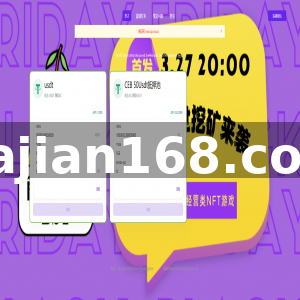
- NFT-Based Participation Certificates: Represent node hosting tiers as non-fungible tokens that users can trade or transfer. This requires ERC-721 smart contract integration and is a useful exercise in connecting a PHP backend with Web3 interfaces.
- Gamified Modules: Add daily check-ins, lucky draws, and task systems. For example, seven consecutive check-ins could unlock a temporary boost or a bonus token allocation.
- Social Sharing Utilities: Implement team leaderboards, referral posters, and social-media-friendly invitation pages. This is helpful for studying how referral links and dynamic images are generated.
- Localized Payment Gateways: Integrate Paytm or PhonePe for India, Mercado Pago for Brazil, and GCash for the Philippines to understand how regional payment adapters are built.
- Data Dashboard: Add a real-time visualization dashboard in the admin area showing registered users, active node slots, daily token flow, and withdrawal volume. This is a good way to practice connecting FastAdmin with charting libraries.
Part Five: FAQ — Frequently Asked Questions
Q: What is this platform primarily used for?
A: It is a technical demonstration and learning project that shows how to build a multi-language, frontend-backend separated membership and referral system using FastAdmin. It is not a production investment product.
Q: Does this system guarantee earnings or returns?
A: No. Any token balances, tier prices, or reward schedules shown in the source code are placeholder values for testing. There are no guaranteed returns, and real-world operation requires independent legal and financial review.
Q: What should I check if a user reports missing tokens?
A: Review the backend task logs, cron status, and the user’s membership tier validity. Verify whether the token distribution job ran successfully and whether the user’s wallet address and withdrawal password are correct. A ticket system with response-time targets is recommended for production support.
Q: Can this project be adapted for domestic deployment?
A: Technically the code can be translated and rebranded, but domestic regulations in most countries impose strict requirements on token-based, membership, and referral programs. Consult a local lawyer and rewrite all user-facing copy before considering any live deployment.
Q: Which skills can a developer learn from this deployment?
A: You can practice FastAdmin/ThinkPHP backend development, plain-JS frontend internationalization, USDT-TRC20 wallet integration, MySQL indexing and scheduling, Nginx/CDN deployment, and multi-language content management.
⚠️ Important Notice: This article is shared purely as technical deployment experience and does not constitute investment advice or an endorsement of any business model. Distributed incentive and node hosting simulations may be subject to financial, securities, and consumer-protection laws depending on the jurisdiction. Operators must ensure that all users understand the risks, that no fixed returns or capital protection are promised, and that legal counsel is consulted before any real-world launch. Participation by minors is not permitted.
#DistributedIncentivePlatform #FastAdminNodeHosting #MultiLanguagePlatform #BlockchainMembership #USDTWithdrawalIntegration