Multi-Language Demo Trading Platform Setup: Complete Forex, Crypto, and Precious Metals Simulation System Development Guide
Multi-Language Demo Trading Platform Setup: Complete Forex, Crypto, and Precious Metals Simulation System Development Guide
Disclaimer: The content below is for technical education and demonstration only. It is not investment advice, and it does not guarantee any returns. Running a real financial operation requires the appropriate licenses and full compliance with local laws and regulations. Always consult qualified legal and compliance professionals before offering live financial services.
About two years ago, a client asked me to build a demo trading platform covering futures, forex, and cryptocurrency with a multi-language frontend. I thought it was going to be a few K-line charts and some order buttons, but the requirements kept expanding and the build ended up taking nearly a month. That project gave me a solid understanding of demo trading system architecture, and I’m writing this down for anyone who wants to build a similar simulation environment without wandering into regulated financial territory.
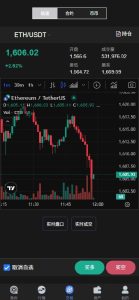
The core of a multi-language demo trading platform is split into two parts: the frontend display and the backend simulation logic. The frontend needs to give users intuitive price-trend views, including timed demo, minute-level, and hour-level K-line displays. The backend handles demo order matching, simulated profit/loss calculation, and demo balance adjustments. It looks simple on the surface, but keeping data consistent under high concurrency is a real challenge.
1. System Features Overview
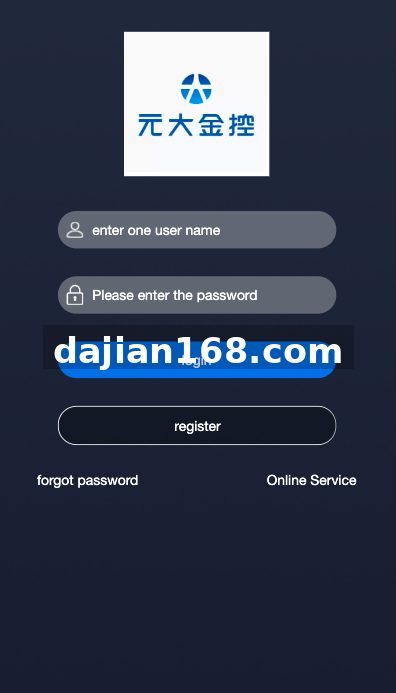
- Multi-language Frontend: Supports English, Chinese, Vietnamese, Thai, Japanese, and more. The interface is built with the Vue.js framework and uses independent language-pack management. Adding a new language only means translating a JSON file; you don’t need to recompile the whole project. The interface style can be customized, including dark and light mode switching.
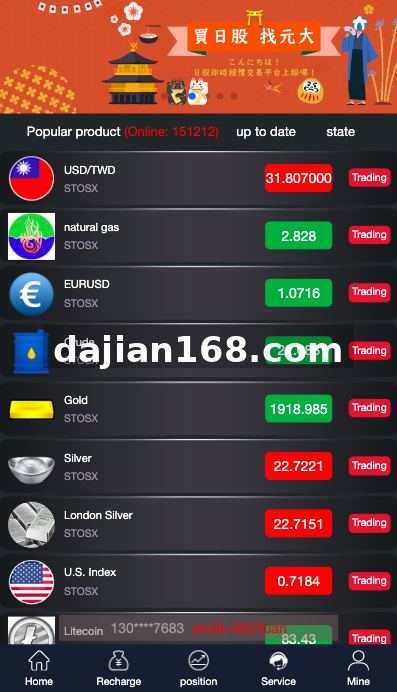
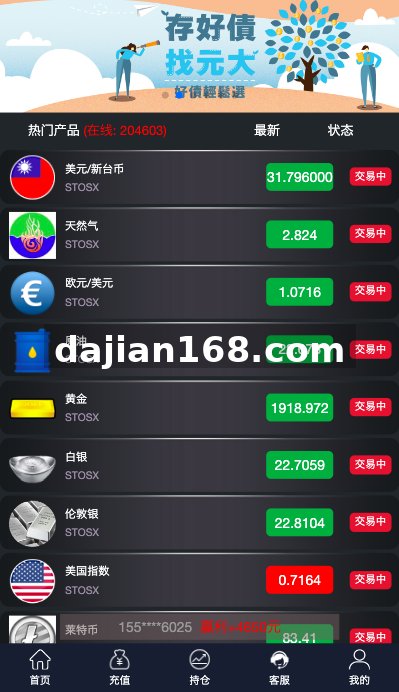
- Multi-asset Simulation Support: Supports futures, forex, cryptocurrency, precious metals, and stock indices in demo mode. Each asset can independently set simulated lot sizes, minimum demo trade amounts, and maximum exposure limits. The backend also lets you add custom assets by configuring market data sources and simulation rules.
- Live Market Data Stream via WebSocket: The system integrates multiple market data sources such as Binance, OKX, and TradingView for demonstration feeds. Data is pushed to the frontend through WebSocket, with latency typically under 300 milliseconds in test conditions. It supports K-line charts, time-sharing charts, and depth charts.
- Risk Simulation and Controls: The backend supports setting maximum user positions, single-trade maximum amounts, daily trading limits, simulated liquidation lines, and warning lines. It also includes IP whitelisting, device whitelisting, and off-site login alerts. Unusual trading behavior automatically triggers risk alerts in the simulation environment.
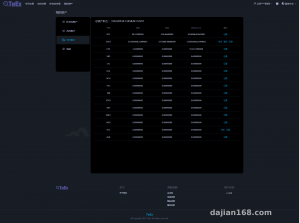
- Backend Data Statistics: Provides dashboards for online demo users, simulated trading volume, profit/loss statistics, and user retention. Supports filtering by time period, asset type, and user level. Data can be exported as Excel reports for analysis.
2. Pre-deployment Preparation and Notes
- Market Data Source Selection for Simulation Feeds: Do not rely on a single source. Use Binance or OKX API as the primary feed, with TradingView or CoinGecko as backup. The system can switch automatically when the primary source is unstable, which prevents demo sessions from breaking due to market data disconnections.
- Database Architecture: Order tables and transaction records should be separated; otherwise query performance degrades quickly. Order tables can be partitioned by month, and transaction records can be partitioned by user ID modulo. Read-write separation is strongly recommended, with queries routed to read replicas.
- Caching Strategy: User positions, demo account balances, and current market prices are high-frequency data and should be stored in Redis. Market data can use a 1-3 second cache, while user account data should be treated as real-time in the simulation.
- Payment Integration Examples: If the demo platform includes deposit and withdrawal flows, configure at least two payment provider integrations as examples, with one primary and one fallback. USDT examples are common for overseas test setups, and both ERC20 and TRC20 support are typically required.
- SSL Certificates and CDN: Enforce HTTPS across the whole site. Demo interfaces and fund-operation pages should use EV SSL certificates for stronger user trust. Static resources can be served through a CDN, while dynamic APIs use direct connections or dedicated acceleration.
3. Common Issues and Troubleshooting
3.1 K-line Data Loading Lag
Early versions had the frontend request K-line data directly from the backend API, which put heavy pressure on the database during high demo concurrency and caused frequent K-line loading failures. The fix was to cache the last 24 hours of K-line data in Redis and have the frontend query Redis first. Historical data was moved to pre-aggregated tables generated at 1-minute, 5-minute, 15-minute, and 1-hour intervals. After this optimization, K-line loading dropped from around 5 seconds to roughly 200 milliseconds in test conditions.
3.2 Concurrent Demo Orders Causing Duplicate Balance Adjustments
During a load test with 1,000 concurrent simulated users, we occasionally saw duplicate demo balance adjustments. The root cause was incorrect MySQL row locking. The fix was to move the order logic to Redis atomic operations with Lua scripts, plus database unique indexes to prevent duplicate demo orders. With both protections in place, a 100,000-order load test produced zero duplicate adjustments.
3.3 Page Flashing During Language Switching
Vue.js route switching combined with large language packs caused brief white screens. The fix was to implement lazy loading for language packs: only the default language is loaded on the homepage, and other languages are loaded asynchronously when the user clicks to switch. Route caching was enabled so language switching does not require re-rendering page components.
3.4 Demo Order Price Slippage
Testers reported cases where the displayed demo price and the simulated execution price differed by more than 1%. The issue was latency across the data-source-to-server-to-frontend chain. The fix was to validate the market data timestamp on order placement and prompt the user to re-order if the data was older than 3 seconds. Backend slippage protection was also added to automatically reject demo orders when the slippage exceeded the configured threshold.
4. Custom Development Options
- Social Trading Feature: Build a demo trader leaderboard where users can choose to follow a top trader. The system replicates the trader’s simulated open and close positions with proportional sizing. This module needs a signal replication engine and delay compensation mechanisms.
- AI Demo Trading Signals: Integrate machine learning models trained on historical market data to generate buy/sell signal markers above the K-line charts. Users can choose whether to follow the signals in simulation mode. This module usually requires 2-3 months of R&D and involvement from a data scientist.
- Social Features: Add a trading community where users can post, share simulated trades, and follow each other. Community content can increase user engagement, but content moderation is essential to prevent the spread of sensitive information.
- Regulatory Compliance Integration: For compliant markets, integrate KYC identity verification, AML screening, and transaction monitoring. These are typically third-party SaaS services charged by API call volume.
Key Tip: The core risk in a demo trading platform lies in simulated market data integrity and transparent demo logic. If you plan to move beyond education, regular third-party audits of the simulation algorithms can help demonstrate that there is no backend price or order manipulation. Audit reports can be published to users to enhance platform credibility.
5. FAQ
Q1: What user scale is this demo system suitable for?
The basic architecture can support around 10,000 concurrent demo users. Beyond that, you would need a distributed architecture with Kafka message queues, Elasticsearch for log retrieval, and database sharding for massive order data. Extension costs mainly involve servers and operations personnel.
Q2: Which cryptocurrency trading pairs are supported?
By default, the simulation supports BTC/USDT, ETH/USDT, LTC/USDT, and other mainstream pairs. The backend can customize any pair as long as the data source provides market data. Niche cryptocurrencies should be approached cautiously in demos due to liquidity issues and wide spreads that may make them unsuitable for simulation trading.
Q3: Does the system support timed demo contract mode?
Yes. It supports timed demo contracts of 1-second, 5-second, 15-second, 30-second, and 60-second durations. After the user places a demo order, the system counts down and determines the simulated outcome based on the closing price versus the opening price at expiration. Timed demo contracts create significant server load, so they should be deployed on a dedicated server group for larger tests.
Q4: How long does it take for beginners to set up this demo system?
With a mature source code base, environment configuration and basic deployment take about 3-5 days. Payment integration examples, market data source configuration, and UI customization need another 1-2 weeks. Building a similar system from scratch usually requires at least 2-3 months.
Q5: Can this platform be used for live financial trading?
No. This guide covers a demo and educational platform only. Real financial trading requires proper licenses, regulatory approval, KYC/AML procedures, and compliance with local laws. Do not use the simulation setup described here for live trading without fully legalizing the operation.
Disclaimer: This article is for technical education and demonstration purposes only. It is not investment advice, and no returns are guaranteed. Real financial operation requires the appropriate licenses and strict compliance with local laws and regulations. Please consult qualified lawyers and compliance advisors before any live deployment.