Building an Overseas Pet-Themed Membership & Loyalty Platform: VUE Frontend Multilingual Deployment Notes
Building an Overseas Pet-Themed Membership & Loyalty Platform: VUE Frontend Multilingual Deployment Notes
Disclaimer: This article is for technical education and demonstration purposes only. It is not investment advice, and no returns or profits are guaranteed. Any live platform built from this source code must comply with local laws, financial regulations, and consumer-protection requirements. Please consult qualified legal and compliance professionals before launching.
I recently deployed this pet-themed membership and loyalty platform for a client targeting overseas markets. The frontend is built with VUE, and the backend runs on a PHP architecture. To be honest, when I first got my hands on the source code, I was a bit surprised — most overseas membership systems of this kind typically use outdated TP frameworks or pure HTML frontends. This one goes straight in with the full VUE stack, and the response speed is noticeably faster than traditional templated builds. The client’s target market is Southeast Asia, so multilingual support had to be rock-solid. Below, I’ll walk you through the entire deployment process and share details from hands-on feature testing.
1. Hands-On Feature Testing: How the Pet-Themed Membership Model Actually Works
The biggest highlight of this system isn’t the rigid “buy — wait for rewards — redeem” model you see everywhere. Instead, it deeply integrates the membership system with virtual pet companions. How does it actually work? I ran several core flows in a local test environment:
Standalone Membership Tiers
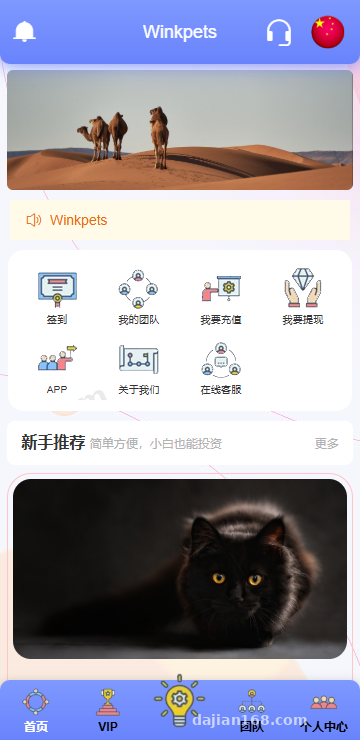
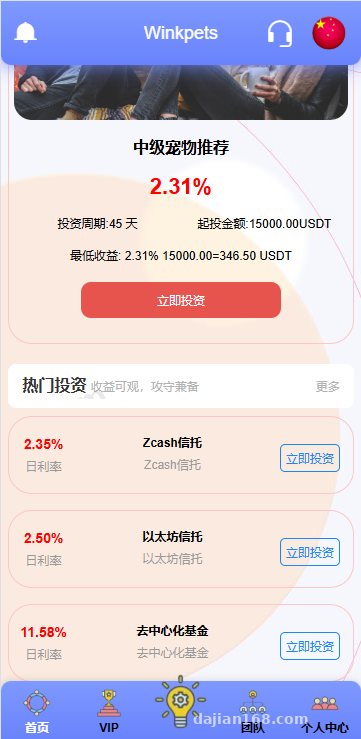
The backend lets you create membership tiers individually, with each tier’s reward-points multiplier, duration, and minimum subscription amount configured separately. Compared to one-size-fits-all products, this standalone tier design is far more flexible. For example, if the client wants to launch a “Persian Cat Short-Term Rewards Plan,” you can set a 7-day cycle and a points bonus just for that tier, and the frontend will display a matching pet icon. The user experience feels much friendlier than staring at pure numbers.
Membership Levels Tied to Virtual Pet Companions
This is what I found the most interesting design choice. When a user recharges or subscribes enough to hit a threshold, the system automatically upgrades their membership level, and each level corresponds to a specific pet type (regular users get a domestic shorthair cat, VIP gets a Ragdoll, SVIP gets a show-quality cat — that kind of logic). The pets aren’t just decorative icons either — the backend lets you configure reward-point bonuses, companion unlock thresholds, and referral reward ratios for each tier individually.
Multilingual Switching Experience
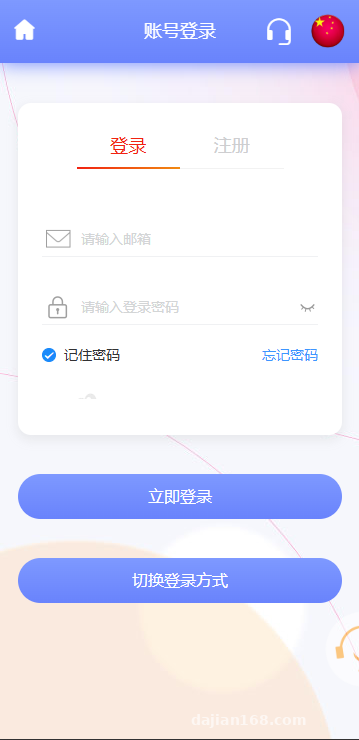
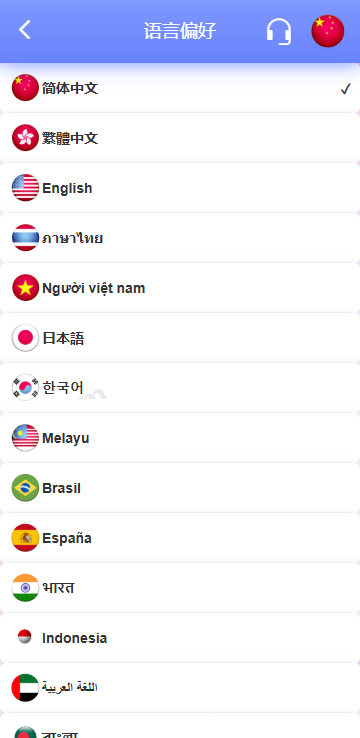
The VUE frontend’s internationalization is thoroughly implemented — it’s not just a matter of swapping out a few text strings. I counted five languages in the language pack: English, Thai, Vietnamese, Indonesian, and Malay. When switching languages, not only does the page text change, but date formats, currency symbols, and decimal separators also update accordingly. Southeast Asian users are particularly sensitive to how currency is displayed, and this system handles that well.
Testing Summary: This source code isn’t one of those half-baked products that “looks like it might work.” The VUE frontend is responsive, multilingual switching happens without page reloads, and the backend configuration options are highly complete. You can tell the original developer had real operational experience — this wasn’t built just to stack features for selling source code.
2. Deployment Essentials: Environment Configuration and API Integration
Now that I’ve covered the features, let me share some pitfalls I ran into during deployment, as a heads-up for anyone planning to set this up.
Backend PHP Environment Requirements
The system runs on PHP 7.4 + MySQL 5.7. I recommend setting it up directly through the Baota (BT) panel — it’s the easiest path. I initially tried installing it on PHP 8.0, but ran into compatibility issues with an encrypted extension, which threw a bunch of deprecation warnings. Simply downgrading the version fixed it. Nginx requires pseudo-static rules, and the source package includes .htaccess and nginx.conf examples — just modify them according to your setup.
Payment Gateway Integration
On the payment side, the source code reserves two channels: USDT and bank card transfers. You can configure receiving addresses and bank information in the backend. If the client needs to integrate third-party payment gateways (common ones in Southeast Asia include TrueMoney, PromptPay, etc.), you’ll need to do some secondary development on the payment callback logic. The payment controller in the source code is reasonably well-structured — find the notify method in the Pay directory, and adding a new channel based on the parameters isn’t difficult.
VUE Frontend Build
The frontend VUE project uses Vue 2 + Vue CLI. A few things to watch out for during the build: the default API address is hardcoded in config.js, so you’ll need to change it to your own server’s domain. If you don’t want to modify the file every time, you can set up a reverse proxy in Nginx — forward any frontend requests hitting /api to the backend. That way, you won’t need to touch the frontend code at all.
3. Target Audience and Secondary Development Suggestions
Who is this source code for? Here’s my rough breakdown:
Category 1: Operations teams targeting overseas markets. Especially those going after Southeast Asian users where pet economy demand and subscription-based loyalty interest overlap. The pet theme naturally feels approachable and trustworthy — far easier to gain user trust than a plain-numbers micro-rewards system.
Category 2: Technical teams looking to do secondary development for niche verticals. The VUE frontend has solid component-based architecture, and UI components like pet icons and membership cards are easy to swap out. If you want to replace the pet theme with something else (cars, luxury goods, etc.), you can essentially go live just by swapping the icon library and copy.
Category 3: Individual site owners wanting to test overseas membership platforms. This source code is feature-complete and moderately easy to deploy — suitable as a learning project or for small-scale trial operations. One caveat though: any live loyalty or subscription business must comply with local regulations, so don’t go all-in on large-scale promotion right away.
Frequently Asked Questions
Q: This system supports standalone membership tiers — how exactly do membership levels map to virtual pet companions?
A: In the backend under “Member Management → Tier Configuration,” each tier can be individually bound to a pet type, with a reward-point bonus configured (e.g., VIP users earn 0.5% more points per qualifying action than regular users) and an upgrade threshold set. When a user’s subscription or recharge reaches the threshold, the system automatically upgrades them, and the corresponding pet icon, companion page, and entry animation all switch in sync.
Q: Which languages does the VUE frontend support? Can I add my own?
A: The default setup includes English, Thai, Vietnamese, Indonesian, and Malay — all built on an i18n solution, with language packs stored as separate JSON files. To add a new language, simply copy the en.json file, translate it, and add a new option in the language switcher component. No changes to core code are required.
Q: What are the minimum server requirements to deploy this system?
A: For early-stage testing, a 2-core 4GB cloud server is sufficient — it can handle VUE frontend static files, the PHP backend, and MySQL. If concurrent users exceed 200, I’d recommend upgrading to 4-core 8GB and pushing static assets to a CDN. This will noticeably improve first-screen load time.
Q: Can I start operating the system right after getting the source code? What third-party services do I need to purchase?
A: Core functionality is ready to use out of the box, but before going live, I’d recommend preparing: a domain SSL certificate (HTTPS is a must — overseas users are very sensitive to the security lock icon), an SMS verification service (Twilio is commonly used in Southeast Asia), and an email push service (SendGrid). Combined, these cost only a modest amount per year but significantly boost user retention.
Q: What compliance steps should I take before launching a live platform?
A: Before going live, consult local legal counsel to confirm your loyalty program, subscription model, and reward-point mechanics comply with consumer-protection laws and any applicable financial regulations. Obtain necessary registrations or licenses, set clear terms of service, and ensure users understand that reward points are not guaranteed monetary returns.
Disclaimer: This guide is provided for technical education and demonstration only. It does not constitute investment advice, and no returns, profits, or operational success are guaranteed. Any platform deployed using this code must comply with all applicable local laws, financial regulations, and consumer-protection rules. Always seek professional legal and compliance advice before launching.
#PetMembershipPlatform #VUEFrontend #MultilingualSourceCode #PHPLoyaltySystem #OverseasMembershipPlatform