Building a Multi-Language Digital Asset Trading Platform: Contract, Option, and Spot Trading Deployment Guide
Building a Multi-Language Digital Asset Trading Platform: A Practical Guide to Contract, Option, and Spot Trading Systems
Last year I worked with an overseas fintech team that wanted to build a white-label digital asset trading platform for institutional clients. The project took about ten weeks from architecture design to staging deployment. This article shares the technical decisions, deployment workflow, and common pitfalls we ran into. It is intended for developers and engineering leads who are exploring similar systems. Please note that this guide focuses purely on software architecture and deployment; it does not cover financial licensing, KYC/AML compliance, or market-making strategies.
System Modules and Technology Stack
The platform used a standard front-end/back-end separation. The mobile client was built with uniapp, the admin dashboard with Vue 3 and Element Plus, and the back-end with Laravel. The matching engine and wallet services were isolated into their own processes so they could be scaled independently.
- Spot trading: supports multiple trading pairs with real-time order-book updates and candlestick charts delivered over WebSocket.
- Earn/staking module: users can lock assets for a fixed period. Yield rates and cycles are configured in the admin panel and should always be backed by actual revenue or third-party DeFi protocols.
- Launchpad module: projects can run token sales with quota limits and whitelist controls. Every project must pass legal review before going live.
- Platform token utility: used for fee discounts and membership tiers only. We explicitly avoided promising any guaranteed returns or price appreciation.
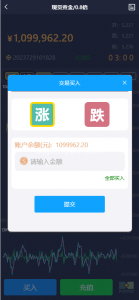
- Derivatives module: supports perpetual and delivery contracts as well as European-style options. Leverage, margin ratios, and liquidation rules are disclosed prominently in the UI.
- Risk control and audit logs: every order, cancellation, deposit, and withdrawal is persisted for compliance and dispute resolution.
Pre-Deployment Checklist
Trading platforms are sensitive to latency and uptime, so the environment setup is not something to rush. Below is the baseline we used for staging and the recommended production configuration.
- Server: minimum 4 vCPU / 8 GB RAM for staging; production should start at 8 vCPU / 16 GB RAM with SSD storage and at least 10 Mbps bandwidth.
- Operating system: Ubuntu 22.04 LTS or Rocky Linux 9.
- Runtime: PHP 8.1+, MySQL 8.0, Redis 7.0, Nginx 1.24+, Node.js 18+.
- Domain and SSL: separate domains for the web portal and the API, with HTTPS enforced everywhere. Use Let’s Encrypt or a commercial certificate.
- Market data feed: integrate public market-data APIs such as Binance, Coinbase, or OKX as reference price sources. Always read and comply with their API terms of service.
- Notifications: email or SMS services for sign-up verification, login alerts, and fund-transfer confirmations. SendGrid or AWS SES work well for international users.
⚠️ Compliance notice: before any public launch, confirm the regulatory requirements of your target jurisdictions. Markets such as the United States, the European Union, Singapore, and Hong Kong have strict licensing, KYC/AML, and asset-custody rules. Run the system in a closed test environment until legal clearance is obtained.
Common Deployment Issues
1. Candlestick charts freeze or lag
This usually happens when the WebSocket market-data connection drops or the Redis queue consumer stops. We solved it by running queue workers under Supervisor and adding automatic reconnection with heartbeat pings to the market-data gateway. We also cached recent candles locally to reduce upstream API load.
2. Database lock contention during order spikes
When a popular token sale or a volatile market event occurs, direct database writes can saturate connections. The fix is to push orders into a Redis queue and let php artisan queue:work consume them asynchronously. We also added limit_req rate limiting at the Nginx layer.
3. Missing translations after adding a new language
uniapp stores translations in JSON files under locales/. New features often introduce keys that are only present in the default Chinese file. We added a small i18n lint step to the CI pipeline that fails the build if any language file is missing keys.
Security and Operational Recommendations
If the platform will handle real user funds, the following are non-negotiable:
- Cold and hot wallet separation: keep the majority of assets in cold storage or an MPC custody solution; only keep operational float in the hot wallet.
- KYC/AML integration: implement ID OCR, face matching, and sanctions-screening checks. Trigger enhanced due diligence for large deposits or withdrawals.
- Reconciliation: run daily batch jobs that compare internal ledger balances against on-chain balances and raise alerts for any mismatch.
- Penetration testing: perform web and API security testing before launch, plus smart-contract audits if any on-chain interaction exists.
- Backups: take full database backups daily, retain binlogs for at least seven days, and store backups in a separate region.
Frequently Asked Questions
Q: Which languages does the source support out of the box?
A: The default package includes Chinese, English, Japanese, Korean, and Vietnamese. Adding a language is a matter of adding the corresponding translation JSON files in both the mobile app and the admin panel.
Q: Can I launch this source code as a public exchange immediately?
A: Technically it will run, but public operation requires regulatory licenses, legal review, security audits, and banking or payment partnerships. The source code is only the foundation.
Q: Where does market data come from?
A: Integrate public exchange APIs as reference price feeds. Never fabricate prices. Monitor latency, precision, and uptime SLAs from each feed.
Q: How do I achieve high availability?
A: Use master/slave databases with read replicas, Redis Sentinel, and multiple application servers behind an Nginx load balancer. If budget is tight, at minimum separate the database and application onto different machines.
#digitalassettrading #blockchainfintech #exchangedevelopment #tradingplatform #laravel
Disclaimer: This article is for technical learning and system-development experience sharing only and does not constitute investment advice. Digital-asset trading platforms are regulated differently in different countries and regions. Please develop and operate within legal and compliant boundaries. Any form of market manipulation, wash trading, or user fraud is illegal and strongly opposed.