Multi-Channel Payment Gateway & Enterprise Checkout System Deployment: API Integration Notes
Multi-Channel Payment Gateway & Enterprise Checkout System Deployment: API Integration Notes
Disclaimer: This article is for technical education and demonstration only. It is not professional or financial advice. Any real-world deployment must comply with applicable laws and regulations.
Last week, I wrapped up a backend checkout refactoring project for a retail chain client. Their main goal was to consolidate several scattered official payment APIs into a unified gateway dashboard, while connecting the redemption logic for digital gift cards and loyalty points. It took about four days of solid work—from environment setup and sandbox debugging to load testing in production—before everything ran smoothly. While the details are still fresh, I wanted to document the deployment process and common pitfalls of this multi-channel payment gateway and checkout system as a reference for developers working on internal enterprise settlement or e-commerce checkout integrations.
Core Features and Checkout Architecture Review
After getting the source code package, I spun it up locally first. The overall code structure is clean and follows a standard MVC pattern paired with a standalone gateway routing module. It avoids obscure dependencies, making custom development or adding new official APIs pretty straightforward down the road.
1. Multi-Channel API Routing and Unified Checkout
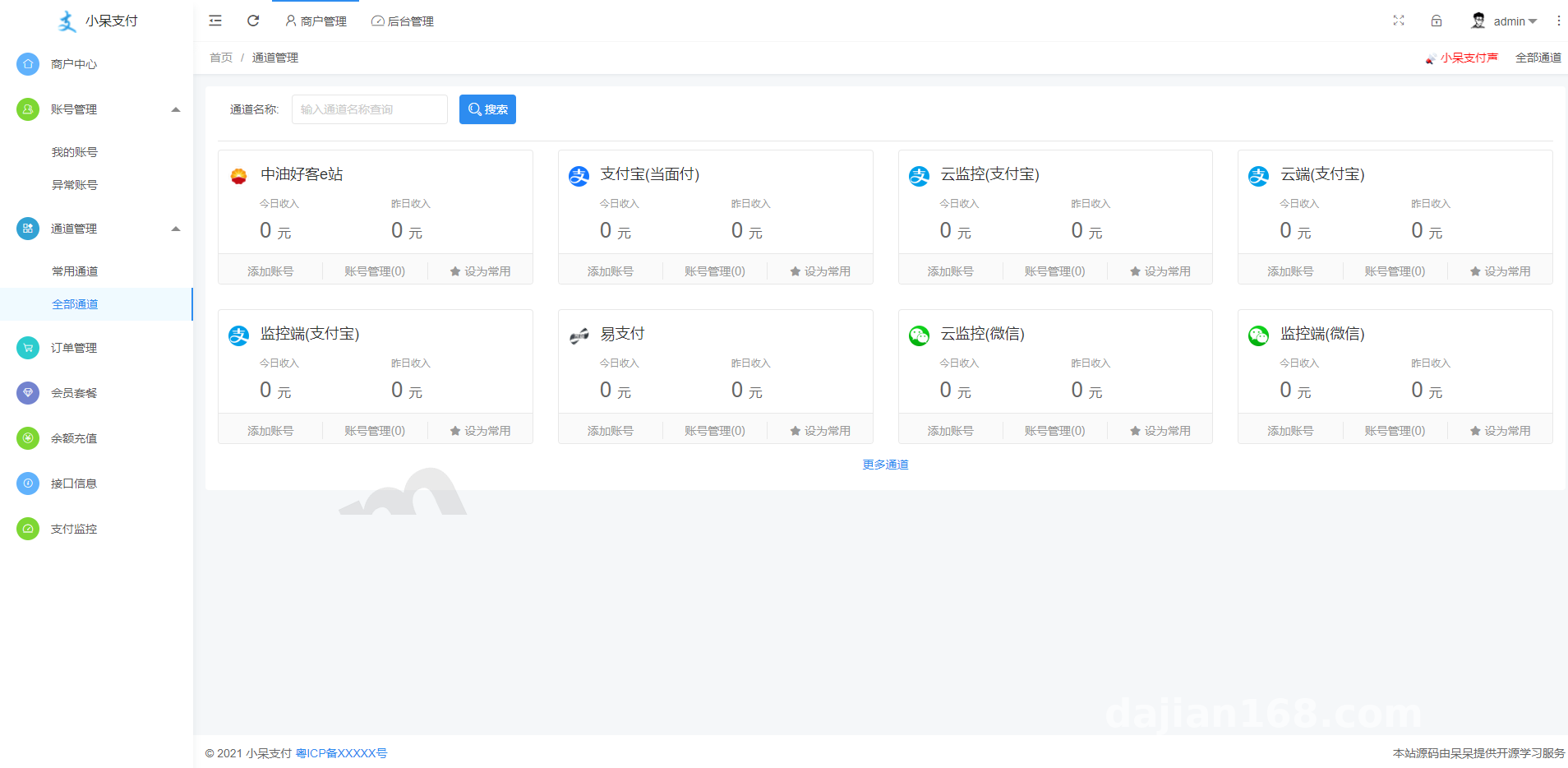
The heart of this system lies in its routing dispatch layer. The frontend checkout calls a unified dispatch endpoint, and the backend automatically matches the corresponding official payment API based on merchant configuration rules, time of day, or transaction amount. During testing, I connected the official sandboxes for WeChat Pay and Alipay, alongside the client’s proprietary prepaid card redemption channel. Standard RSA2 and MD5 signature verification utilities are built right in. You just drop the official AppID, merchant ID, and public/private keys into the admin panel to start initiating pre-order requests.
2. Asynchronous Webhooks and Idempotency Locks
When integrating payment APIs, the biggest headaches are missed callbacks or duplicate entries. Looking through the Callback controller in this codebase, I noticed the author handled this really well. It uses Redis distributed locks to enforce strict order idempotency checks. When multiple notifications for the same merchant order number hit the server concurrently, only the very first request enters the database transaction to update the status. Subsequent requests immediately get a Success response, completely preventing awkward bugs where member balances or loyalty points get credited twice.
3. Financial Reconciliation and Multi-Dimensional Reports
Beyond basic channel parameter settings, the most practical feature in the admin backend is the automated reconciliation module. Using scheduled tasks, the system pulls daily settlement bills from upstream official APIs and compares them against local database logs. Any discrepancies—like overpayments or short payments—are automatically flagged in red and emailed to the administrator. The backend also comes natively with bilingual (Chinese/English) language packs. Teams building independent cross-border e-commerce sites can tweak the language files and use it directly as a multi-language checkout counter.
Developer Testing Highlight: Instead of relying on traditional Crontab loops that constantly scan tables for expired orders, this gateway source code uses Redis Keyspace Notifications paired with a message queue to achieve millisecond-level order expiration and closure. This takes a massive load off MySQL I/O and quickly releases locked inventory or coupons when a user abandons a payment. Make sure you configure Redis persistence properly during deployment!
Server Environment Setup and Deployment Essentials
For the live server, I went with a 4-core, 8GB RAM Linux instance running CentOS 7.9. To save time, I used the Baota (aaPanel) control panel, though the internal parameters definitely need manual tuning—default configs will choke under high-concurrency webhooks.
- Runtime Environment: Nginx 1.20 + PHP 7.4 + MySQL 5.7 + Redis 6.2.
- Required PHP Extensions: You must install
redis,swoole(for running asynchronous queues),bcmath(for high-precision monetary calculations—crucial to avoid floating-point precision loss during split settlements or change calculations), andopenssl. - Removing Disabled Functions: You need to remove
proc_open,pcntl_signal, andexecfrom PHP’s disabled functions list; otherwise, the backend CLI queue listener processes won’t start.
Deployment Pitfalls: SSL Certificates and URL Rewriting
After uploading and extracting the source code, point the web root directory to /public and configure the ThinkPHP URL rewrite rules. Here is a classic trap that catches many beginners: mainstream official payment APIs (whether H5 wake-up or JSAPI) strictly enforce HTTPS and require a complete certificate chain. At first, I slapped on a free single-domain certificate, which caused Android devices to frequently throw “unsecure network environment” warnings when pulling up the checkout counter. Switching to an enterprise-grade SSL with a full intermediate CA bundle and enabling TLS 1.2 and 1.3 in Nginx resolved the issue completely.
Once the database is imported, remember to edit the .env configuration file in the root directory to update the database connection pool, Redis password, and queue prefix. Finally, use Supervisor in the terminal to daemonize php think queue:work --daemon. Once the process status shows RUNNING, the entire checkout gateway is officially live.
Who Should Customize This System?
Based on my code review over the past few days, this system is a great fit for several standard business scenarios:
1. Small-to-Medium Vertical E-commerce or SaaS Platforms: If you don’t want to write separate WeChat Pay and Alipay SDK integrations for every single subsystem, you can deploy this as an internal microservice settlement hub that exposes standard RESTful APIs.
2. Offline Retail Chains, Gas Stations, and Supermarkets: Just like the client I helped this time, businesses with their own member stored-value systems or internal loyalty cards often need combined checkout flows alongside mainstream mobile payments. Modifying the redemption logic in this codebase gets you to market fast.
3. Independent Developers for Learning and Reference: For programmers looking to study ledger design under high concurrency, distributed transaction locks, and third-party API security signature mechanisms, the architectural patterns in this code are well worth reading through.
Frequently Asked Questions
Q: Everything worked fine in the local sandbox, so why am I not receiving asynchronous notifications after switching to production?
A: Over 90% of the time, it’s because your server firewall or security group is blocking the upstream API’s callback IPs, or your callback URL (notify_url) includes non-standard ports or redirects. Make sure the callback address is a public HTTPS link on standard port 80 or 443, and that it accepts direct POST requests without authentication. Never put callback routes inside middleware that checks for active user sessions.
Q: Is it a lot of work to add a new bank or third-party official API myself?
A: Not at all. The system uses the Strategy Pattern, meaning all channels inherit from a unified PayInterface class. You just create a new class file under the extend/channel/ directory, implement the three standard methods—unifiedOrder (create order), notify (webhook signature verification), and query (order status inquiry)—and register the class identifier in the admin channel settings.
Q: How can I optimize the database if deadlock errors occur under high concurrency?
A: First, check your MySQL transaction isolation level; setting it to READ-COMMITTED is recommended. Also, for the merchant balance update table in the source code, consider implementing optimistic locking (using a version column) or pushing high-frequency accounting operations into a Redis cache queue first, then batch-writing them to the database via scheduled jobs. This prevents multiple processes from locking the same merchant row simultaneously.
Disclaimer: The system deployment process and source code analysis documented in this article are strictly for technical education, enterprise checkout system development, and API integration research. Please comply with local laws and regulations, ensure proper commercial licensing when connecting official APIs, and never use related technologies for unauthorized purposes.
Disclaimer: This article is for technical education and demonstration only. It is not professional or financial advice. Any real-world deployment must comply with applicable laws and regulations.
#Payment Gateway #Checkout System #API Integration #Source Code Deployment #PHP Development
-
 Alipay QR Code Scan
-
 WeChat Scan Pay